

The EU's proposed Digital Fairness Act would turn most of the D2C conversion toolkit into regulated design choices for every brand selling online to EU consumers: fake scarcity, pre-ticked add-ons, fees that appear at checkout, strike-throughs against a recommended retail price, free trials that roll silently into paid plans. The evidence for those levers shows conversion now and no proven durable return, so the sensible move is to redesign them under one commercial owner, subscriptions and urgency first, while the text is still a proposal that Parliament and Council can change.
Key takeaways
- The European Commission puts financial harm to EU consumers from the targeted online practices at at least EUR 10.3bn in 2026, rising to up to EUR 16.7bn in 2035 if nothing changes.
- In an EU check of 314 online traders during the 2025 Black Friday sales, 36% tried to add optional items to baskets and 30% referenced discounts incorrectly, under rules that already apply.
- In a large field experiment, auto-renewal subscriptions earned no more revenue than auto-cancel ones after one year and left 10% fewer subscribers over two years.
What would the Digital Fairness Act change for brands?
On 11 November 2026 the European Commission tabled its proposal, COM(2026) 1100, a Regulation that would replace the Unfair Commercial Practices Directive. Unlike the platform-only Digital Services Act, it would cover every trader selling to consumers, including a brand's own D2C site and app. Commissioner Michael McGrath called it "the most ambitious reform of EU consumer protection rules in a generation".
A dark pattern is an interface built to steer shoppers into choices they would not freely make. The proposal bans them in general and lists ten that would be unlawful in every case.
Four changes matter most for consumer-goods journeys. The blacklist would cover false low-stock or popularity claims, defaults the shopper has to undo, confirmshaming and cancellation obstacles (Annex I, points 53 to 62). Fixed fees would have to be in the first price shown, and percentage or strike-through comparisons against a manufacturer's recommended price would be banned. A free trial would need a reminder before it ends; without that or the shopper's express agreement, the shopper would not be bound by the paid contract (Article 20). Brands using influencers would have to ensure by contract that every commercial post is labelled (Article 11).
None of this is law yet. On 17 November 2026 the European Parliament had not yet assigned a committee. The text may change in Parliament and Council, and it would apply 12 months after entry into force, so the date depends on adoption. This is a commercial reading, not legal advice.
How big is the harm, and does it reach consumer goods?
The Commission's impact assessment sizes the problem in money.
The same document puts the recurring cost to business at EUR 678m a year EU-wide after removing overlaps (EUR 1.2bn before). For a large brand the bill is redesign work, not compliance overhead.
The levers are not confined to travel sites or games. In a coordinated check published on 26 March 2026, consumer authorities in 23 EU countries, Iceland and Norway examined 314 online traders during the 2025 Black Friday and Cyber Monday sales.
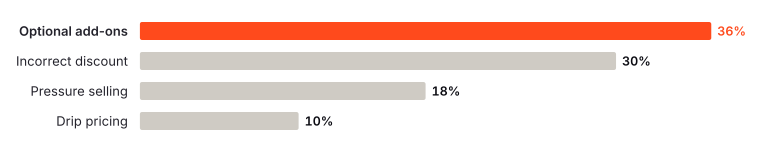
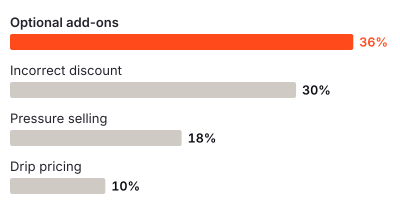
Thirty-six per cent of the 314 traders tried to add optional items to the basket, four in ten of them without clearly asking; 30% referenced discounts incorrectly, 18% used pressure selling and 10% added fees late. All of that is already unlawful. The proposal would put the most common levers on a list that needs no case-by-case test.
Which conversion levers should brands redesign first?
Do these levers pay? Conversion now, no proven durable return
A scarcity badge or a pre-ticked box lifts conversion on the day it ships. The public evidence does not show that the lift lasts.
The clearest test comes from subscriptions. In a large randomised field experiment with a European newspaper (Miller, Sahni and Strulov-Shlain, 2023 working paper), about half of the readers who took an auto-renewing promotion went on to pay full price, against very few on auto-cancel, and the extra subscribers this created did not read the paper. Between 24% and 36% of prospects avoided subscribing at all when offered auto-renewal. After one year auto-renewal and auto-cancel earned the same revenue, and two years on the subscriber base was 10% smaller.
In the US, in September 2025, Amazon agreed to pay USD 2.5bn to settle Federal Trade Commission claims over Prime sign-up and cancellation (USD 1bn penalty, USD 1.5bn refunds), without admitting wrongdoing, and committed to a clear way to decline and a simpler exit. We found no public study showing durable incremental revenue from these tactics.
Exposure against evidence: the redesign order
Our rule is simple: rank every lever by its exposure under the proposal against the evidence that it earns durable return. Where the exposure is highest and the evidence is only short-term conversion, redesign first.
| Proposed rule | Exposure, move |
|---|---|
| Free trials that roll into paid: proposed reminder before the trial ends; without it or express consent, no binding contract (Art 20). | Highest: contract not binding. Redesign first |
| Cancellation friction, confirmshaming: proposed blacklist (Annex I 56, 62) and a mandatory cancel function (Art 23). | Highest: banned outright. Redesign first |
| Scarcity cues, pre-ticked add-ons: false or persistent scarcity and opt-out defaults proposed for the blacklist (Annex I 53-55). | Highest: banned outright. Stop |
| Late fees, strike-throughs vs RRP: proposed bans on fixed fees added after the first price and on RRP comparisons (Annex I 11, 12). | Highest: banned outright. Stop or redesign |
| Influencer posts: explicit ad labels proposed; brands must ensure them by contract (Art 11(1), 11(6)). | High: duty runs through brand contracts |
| Personalised offers and prices: proposed limits only for known minors or vulnerable consumers, or special-category data (Arts 12-13). | Narrow: keep, exclude those groups |
Price comparisons deserve a closer look. In the March 2026 check, 34% of traders displayed price comparisons and 60% of those did not explain the reference clearly. Under the proposed ban on comparisons against a recommended retail price, the "was RRP" strike-through goes; showing the RRP itself would still be allowed.
Influencer programmes move from the agency's desk to the brand's contract. In a 2024 EU sweep of 576 influencers, 97% posted commercial content but only 20% systematically disclosed it as advertising. BEUC's Director General Agustín Reyna, commenting on 10 November on the proposal as announced, called the act "a much-needed tool to give consumers back control of how much time and money they spend online".
Personalisation is less exposed than headlines suggest: the limits cover only known minors, vulnerable consumers and sensitive data.
AI shopping agents: the duties sit with the agent provider
For brands, less than the coverage implies. Article 26 binds the company that offers the shopping agent: it must let the shopper choose to confirm every purchase, only purchases within limits such as a price cap, or none, and disclose any payment for proposing an offer. A brand selling to an agent would mainly send a confirmation after each agent purchase.
The indirect effects are commercial. Paid placement in an agent would trigger a disclosure and a forced confirmation, so it buys less. Terms agents filter on, such as price and withdrawal rights, belong in machine-readable form in the product record brands must own. Only a brand running its own buying assistant would carry the full duties.
What to do now
- Name one owner for conversion design (eCommerce or D2C lead). Within 30 days, list every scarcity cue, default, fee, price comparison, trial and cancel step on owned sites.
- Redesign subscriptions first (subscription product owner). Within 60 days, add trial-end reminders, a visible cancel control and express consent to convert, and measure revenue and churn at 12 months, not sign-ups at 30 days.
- Retire the per se levers (eCommerce lead with pricing). Within 90 days, remove false or persistent scarcity, pre-ticked add-ons, late fixed fees and RRP strike-throughs, and test honest urgency, such as a dated offer, in their place.
- Rewrite influencer and agency contracts (brand marketing with legal). Within 90 days, require explicit ad labels, monitoring and a remedy for 2027 programmes, and ask legal to read the final text before go-live.
The bottom line
Brands that wait for adoption will meet the rule as a legal clean-up under deadline. Brands that redesign now trade a conversion lift they cannot prove lasts for journeys that hold up in front of an authority and a returning customer.
In the Motion & Gain value chain this sits in Corridor 2, Boost Consumer Engagement Effectiveness: a seamless purchase journey (O10) and honest conversion (O12), with influencer reach (O7) in scope.
Questions leaders ask
When would the Digital Fairness Act apply?
Not before adoption. The Commission published the proposal on 11 November 2026; by 17 November the European Parliament had not yet assigned a committee. The text would apply 12 months after entry into force, so the date depends on Parliament and Council, and the provisions may change. Journeys and contracts designed now may still be running when it applies.
Does the proposal ban personalised pricing?
No. As proposed, Article 13 bars profiling-based personalised prices only where they are reasonably likely to harm a consumer the trader knows, with reasonable certainty, to be a minor or vulnerable. Article 12 bars ad targeting of known minors and targeting based on sensitive data. Neither requires a brand to collect more data to find out.
Are brands responsible for influencer disclosure?
Under the proposal, yes. Influencers would have to label commercial content explicitly, and any trader using them would have to ensure that by contract or other means (Article 11). That puts disclosure clauses, monitoring and remedies into every creator agreement.