The Great Compression
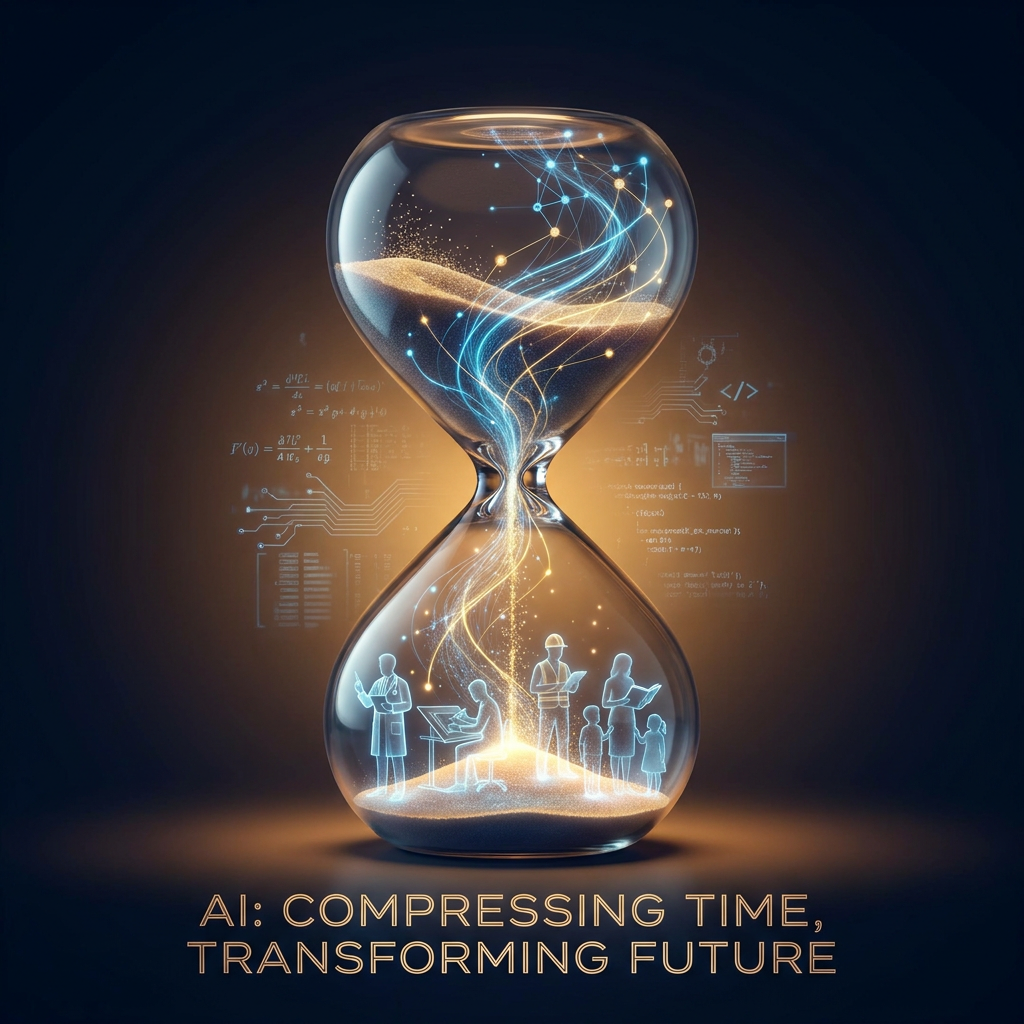
AI tutors adapt to a learner's pace in real time, diagnose gaps in seconds, and generate infinite practice problems calibrated to the exact edge of a person's ability. Coding, languages, financial modeling, medical diagnostics, legal research — skills that once required years of apprenticeship are now compressed into weeks. Simultaneously, the repetitive scaffolding of work — drafting first passes, reconciling spreadsheets, summarizing meetings, triaging tickets — is being handled by agents that never sleep.
The consequence is a strange inversion. The bottleneck in learning is no longer information or instruction. It is judgment— knowing which questions to ask, which outputs to trust, and which decisions matter. Education is shifting from knowledge transfer to taste development.
What This Means for Organizations
Three shifts are already visible:
Roles are dissolving into skills. Job descriptions built around static competencies are becoming obsolete. What matters is a person's ability to compose AI-augmented workflows around whatever problem lands on their desk that quarter.
The junior tier is under pressure. The bottom of the pyramid — the analysts, associates, and assistants who traditionally did the repetitive work — is being automated first. This threatens the pipeline that historically produced senior talent through years of pattern recognition.
Learning velocity becomes a moat. Organizations that can reskill their workforce in weeks rather than years will out-compete those still running annual training cycles. Human capital is becoming a flow, not a stock.
What CHROs Should Be Doing Today
The CHRO's job description just got rewritten, whether or not the CHRO noticed. Five moves matter now:
Start by rebuilding the skills taxonomy around capabilities and judgment, not job titles. Titles will keep churning; the underlying human capabilities — synthesis, ethical reasoning, cross-functional translation, customer empathy — will not.
Redesign the early-career path. If AI is doing the grunt work that used to season juniors, the organization needs deliberate substitutes: rotation programs, shadowing, structured "reps" on real judgment calls with senior feedback.
Invest in an internal learning infrastructure that runs at AI speed. Static LMS platforms and quarterly training calendars are dead. Think adaptive learning agents, always-on coaching, and skills marketplaces that match talent to problems in days.
Get serious about AI fluency across the whole workforce — not just engineering. Every function needs to know how to prompt, verify, and delegate to AI. This is the new baseline literacy.
Finally, rewrite the psychological contract. When AI compresses learning curves, the deal between employer and employee shifts. People will stay where they grow fastest. Retention will belong to companies that treat every role as a launchpad.
The Bottom Line
The organizations that win the next decade will not be the ones with the biggest AI budget. They will be the ones whose people learn fastest, adapt hardest, and make the best judgment calls at the edges where AI cannot yet reach. CHROs who see this now — and act — will define the winners. Those who wait for the "AI strategy" to be handed down from IT will find their talent already halfway out the door.
The classroom is being compressed. The workplace is next. And the CHRO's calendar is where the future gets built — or missed.